

Tile installation may appear straightforward, but tiny oversights during application can lead to costly rework later. Many builders underestimate the required technique and precision that matter when handling cementitious tile adhesive. Improper mixing, surface neglect, or poor timing can quickly compromise adhesion strength, affecting tile alignment and long-term durability. With the right approach and awareness of common mistakes, projects stay cleaner, stronger, and more efficient. These same principles also apply to other surface-related works such as concrete pavement repair, where proper preparation and material handling are equally critical.
1. Misjudging Surface Preparation
Applying cementitious tile adhesive on unprepared or dirty surfaces often results in weak bonding and early tile failure. Dust, oil, or uneven substrate layers prevent the adhesive from achieving full contact with the surface. Many installers rush this step, assuming the adhesive will compensate for surface flaws, but even premium construction materials in Singapore require a clean, dry, and stable base to perform as intended.
Proper surface preparation begins with cleaning away debris and contaminants using a brush or mild detergent. After drying the area completely, installers should inspect for cracks or loose areas. Levelling compounds or primers may be necessary to create an even surface before spreading cementitious tile adhesive. Skipping these steps compromises grip, causing hollow spots beneath tiles that eventually lead to dislodging.
Checking moisture content also plays a critical role. Excessive dampness from unsealed concrete or newly poured slabs can reduce the effectiveness of the adhesive. Waiting for the substrate to cure fully ensures the adhesive adheres securely, maintaining strength over time.
2. Using Incorrect Water Ratios
Mixing cementitious tile adhesive incorrectly results in poor consistency and reduced bonding performance. Excess water creates a soupy texture that weakens adhesion, while too little water prevents proper spreadability. Many contractors in Singapore still mix adhesive by estimation instead of following the manufacturer’s ratio guidelines, causing uneven tile application and inconsistent drying times.
Accurate mixing begins with using a clean bucket and measuring tools. Adding powder to water, not the other way around, ensures smoother blending and reduces air pockets. Mixing should continue until a uniform paste forms, free from lumps or dry streaks. Allowing the mixture to rest briefly before re-stirring helps activate chemical bonding agents.
Temperature and humidity levels can also affect curing. In hot environments, mixtures dry quickly, requiring smaller batches for continuous workability. Professionals handling construction materials in Singapore usually monitor ambient conditions to adjust water ratios accordingly. Proper consistency ensures adhesive spreads evenly across the trowel, providing full tile coverage and optimal strength.
3. Applying Too Much or Too Little Adhesive
Uneven adhesive thickness is a frequent mistake during tile installation. Using too much adhesive causes excessive squeeze-out and uneven tile alignment, while applying too little leaves gaps that weaken bonding. The goal is to achieve a consistent adhesive layer that fully supports each tile without overflow.
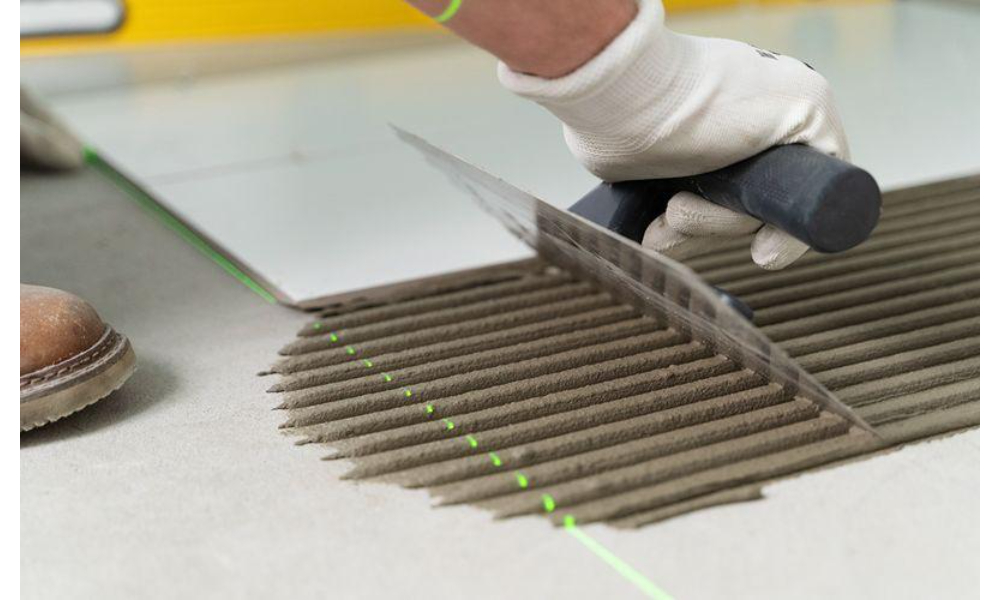
Installers should always use a notched trowel suitable for the tile size. Larger tiles require deeper notches to ensure full contact, while smaller ones work well with shallower ridges. Holding the trowel at a 45-degree angle maintains uniform spread. Applying pressure evenly prevents hollow spots and air pockets.
Another overlooked factor involves coverage verification. Periodically lifting a tile to inspect the back ensures full adhesive contact. Partial coverage indicates the need for adjustment. Cementitious tile adhesive performs best when coverage reaches at least 80% for walls and 95% for floors, especially in high-moisture or outdoor areas. Consistent application not only improves strength but also enhances aesthetic uniformity across the tiled surface.
4. Ignoring Open Time and Pot Life
Every cementitious tile adhesive has an open time—the period during which tiles can be placed after spreading. Exceeding this time causes the adhesive to dry on the surface, drastically reducing bond strength. Some installers continue applying tiles even after the adhesive film starts forming, leading to weak adhesion and premature tile detachment.
Pot life also matters. It defines how long the mixed adhesive remains workable before setting begins. Overextended pot life results in hardened mixtures that no longer spread properly. Professionals handling construction materials in Singapore often monitor these timings carefully to ensure the adhesive performs at full efficiency.
To avoid these issues, workers should prepare adhesive in smaller quantities and use it within the recommended time frame. Touch testing the adhesive helps check readiness—if a light fingerprint leaves residue, it remains workable; if it feels dry, a fresh mixture is required. Environmental conditions, such as high temperature or airflow, shorten open time, so adjustments in mixing and spreading speed become necessary. Adhering to these time-sensitive guidelines ensures maximum bonding and durability. These time-sensitive considerations are also essential in tasks like concrete pavement repair, where timing and material behaviour directly influence long-term strength.
Conclusion
Correctly applying cementitious tile adhesive requires more than spreading material under tiles. Each step, from surface preparation to timing, determines the quality and longevity of the finished work. Builders and homeowners using construction materials in Singapore should remain precise, consistent, and attentive during installation to prevent costly rework later.
Contact ARDEX QUICSEAL today for a trusted building materials supplier in Singapore offering reliable solutions and expert support for your next tiling project.